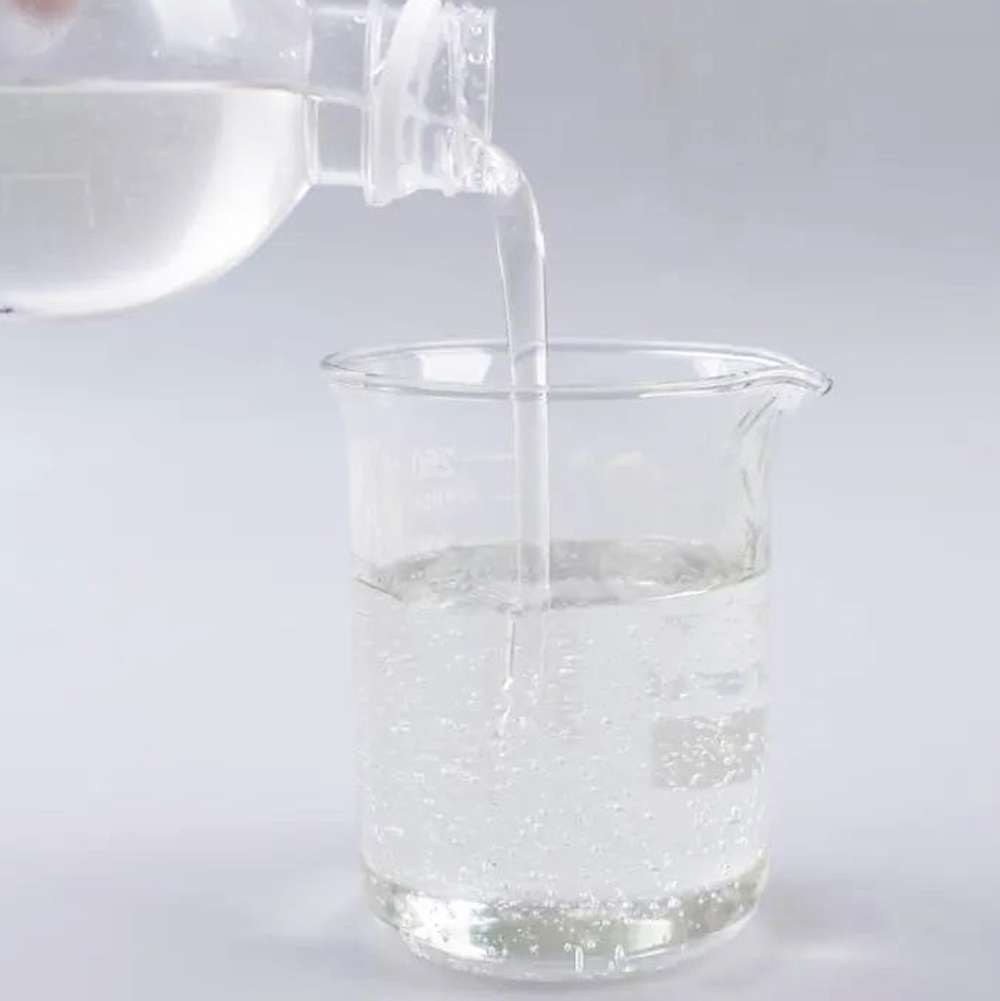
(July 30, 2026) Recently, significant progress has been made in the domestic field of new organic silicon materials. The new generation of low-ring, high-purity polyether silicone oil continuous production lines has completed full-load stable operation assessments, achieving stable batch supply. This marks the official breakthrough of overseas technical barriers for China's high-end polyether silicone oil and the comprehensive acceleration of domestic substitution.
Polyether silicone oil, also known as polyether-modified silicone oil, is a special amphibious surfactant formed by combining organosilicon with polyether chain segments. It combines the excellent smoothness and low surface tension characteristics of organic silicon with the good water solubility and compatibility of polyether, making it an indispensable functional additive in coatings and inks, textile printing and dyeing, daily chemical beauty, agricultural additives, polyurethane foaming, and new energy materials. Traditional high-end products have long relied on overseas imports, facing pain points such as long supply cycles, high procurement costs, and slow customization responses, which restrict the high-quality development of domestic downstream industries.
The newly launched new generation production line adopts a closed-loop, solvent-free catalytic synthesis process, achieving molecular-level precise regulation of the ratio of siloxane main chain and EO/PO polyether segments, and has developed four major product series: hydrophilic, hydrophobic, low-foam, and acid- and alkali-resistant. At the process level, compared to traditional batch production, solvent consumption is reduced by 70%, organic waste gas emissions by 65%, and energy consumption per unit product by 18%, meeting the evaluation standards for organic silicon green factories and aligning with the low-carbon transformation policy direction for fine chemicals. The product effectively reduces system surface tension to 20-25mN/m, maintains stable performance under wide pH 2-12 environments, and can benchmark internationally mainstream imported leveling, wetting, and defoaming additives. At the same time, overall costs are reduced by 25%-35%, delivery cycles shortened by 70%, meeting the needs of high-environmental protection scenarios such as maternal and infant care, food contact coatings, and semiconductor low-ion cleaning.
From the perspective of downstream applications, in the coating and ink field, polyether silicone oil serves as a leveling wetting additive, effectively solving shrinkage defects such as shrinkage cavities and fisheye issues, enhancing the gloss of paint films; In the textile printing and dyeing industry, it can be used as a hydrophilic, soft, antistatic additive to improve dye utilization; Daily chemical cosmetics are used as emulsifying and conditioning aids to improve skin texture; In agriculture, it is used as a spray additive to enhance the spread and adhesion of the solution on crop leaves; In the polyurethane industry, it serves as a foaming equalizer to stabilize the cell structure; At the same time, it is gradually expanding into emerging new energy scenarios such as battery separator coating, opening up new growth opportunities.
Industry analysis points out that the domestic polyether silicone oil market currently faces a pattern of "overcapacity in general applications and shortage of high-end products," with a general product operating rate below 75%, and supply of high-end products with low VOC, low environmental effects, and bio-based modification cannot meet demand. With water-based coatings replacing solvent-based coatings, the dyeing and printing industry phasing out APEO surfactants, domestic beauty brands going global, and new energy industry capacity expansion, the demand gap for high-end polyether silicone oil will continue to widen over the next three years. The 2026 edition of the "General Specification for Green Evaluation of Silicone Products" has been officially implemented, further accelerating the clearing of outdated production capacity and promoting the industry's upgrade toward higher purity, customization, and green sustainability.
Market data shows that by 2026, the domestic polyether silicone oil market size is expected to reach 4.71 billion yuan, a year-on-year increase of 7.5%, with the global market maintaining a steady upward trend. In the second half of the year, leading domestic companies will continue to focus on bio-based polyether silicone oil R&D, replacing petroleum-based raw materials with plant-based raw materials, building a matrix of biodegradable silicone additives, and participating in global green materials market competition. This large-scale mass production of domestically produced high-end polyether silicone oil not only improves the domestic organosilicon new materials industry chain but also helps downstream manufacturing reduce costs and increase efficiency, providing material support for the high-quality development of coatings, textiles, daily chemicals, and new energy industries.