(July 06, 2026)July 6, 2026 On the same day, a number of domestic organic silicone specialized and new enterprises simultaneously completed the stable mass production of high-purity series of double-terminated hydroxypropyl silicone intelligent production lines. The product's ring silicon residue and metal ion control indicators are fully aligned with imported high-end brands, officially breaking the long-term monopoly of overseas companies in the field of reactive modified silicone raw materials, and providing cost-effective domestic raw material solutions for downstream industries such as silicon-modified polyurethane, polyester resin, new energy sealing materials, and high-end coatings.
According to the person in charge of R&D technology, double-terminated hydroxypropyl silicone oil is a linear biprimary hydroxyl-terminated modified polysiloxane. The active hydroxypropyl groups at both ends of the molecule can copolymerize with isocyanate, carboxyl, and epoxy groups. It is the core reaction for preparing silicone block polymers. The intermediate is different from ordinary single-end modified silicone oil. The double-end functional structure can realize the uniform embedding of silicon segments into the resin molecular skeleton, taking into account the advantages of high and low temperature resistance, low surface energy, wear resistance and smoothness of silicone, as well as the adhesion and mechanical strength of polyurethane and polyester substrates.
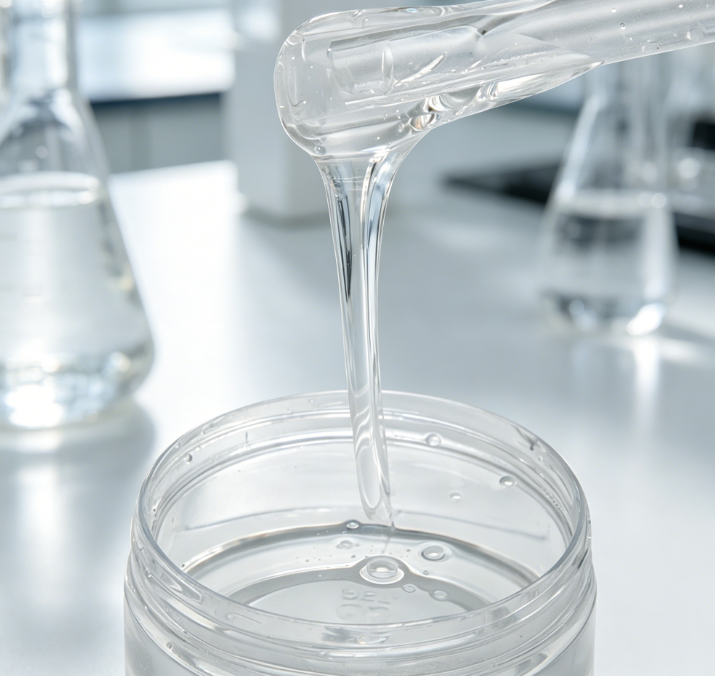
The new mass-produced products cover full gradient specifications with molecular weights of 1000–5000, and the core technical indicators have been greatly optimized: the product appearance is a colorless and transparent liquid, the solid content is ≥98%, the total cyclic silicon (D4/D5/D6) residue is controlled to less than 0.1%, the total metal ion content is less than 1ppm, and meets the environmental protection access standards for electronics, automobiles, and high-end cosmetic raw materials; the hydroxyl content range is 0.6%–2.5%. It can be customized on demand and is suitable for solvent-based, solvent-free, and water-based full-system resin synthesis processes.
Downstream demand continues to explode in many fields
1.Silicone modified polyurethane/polyester resin (core applications)
In the fields of industrial anti-graffiti coatings, leather finishing agents, and high-end textile soft finishing agents, after adding this silicone oil synthetic resin, the finished product has the advantages of long-lasting anti-adhesiveness, resistance to marker pens, low temperature flexibility, and no cracking at low temperatures - 40°C. It also improves paint spray leveling and reduces orange peel and shrinkage cavity defects. Compared with traditional single-ended silicone oil-modified products, the wear resistance is improved by more than 35%, and the hand feels delicate without oil sheen precipitation.
2.New energy vehicles and photovoltaic sealing systems
As the demand for encapsulants for new energy power cells and photovoltaic modules continues to expand in 2026, double-terminated hydroxypropyl silicone oil is used as a chain extender and flexibility regulator for two-component silicone polyurethane sealants, which can reduce the internal stress of the adhesive layer and improve the anti-cracking ability of hot and cold cycles. It is suitable for power battery PACK, terminal blocks, and photovoltaic frame waterproof sealing scenarios. Industry research shows that in the first half of 2026, downstream shipments of high-end reactive silicone oil increased by 13.2% year-on-year, and the growth rate far exceeded that of ordinary silicone oil categories.
3.Release agents, release agents and special additives
Relying on the spontaneous surface tending properties of silicone, this product is used as an oil-based long-lasting release agent. There is no silicon migration after demolding, and it does not affect subsequent printing and bonding processes. It can also be used as a lubricant in plastic processing to improve the extrusion fluidity of polyolefins and engineering plastics, reduce processing energy consumption, and improve the surface finish and wear resistance of products.
4.High-end personal care ingredients
The low-volatility and high-purity specification can be used as raw materials for high-end hair care and skin care. It has excellent compatibility with polyol emulsification systems and strong deposition adhesion. The hair is smooth and non-greasy after use of washing and care products. It has passed the EU REACH and cosmetics safety compliance testing, and gradually replaced imported modified silicone oil raw materials.
Industry development opportunities: Accelerating localization of high-end silicones
In 2026, the domestic silicone industry will enter a boom cycle. Leading companies such as Dongyue Silicon Materials, Xin'an Chemical, and Blue Star Silicone continue to increase their production capacity of special modified silicone oils. Hydroxyl-terminated and hydroxypropyl-reactive silicone oils are listed as key categories of new materials. Previously, high-end double-terminated hydroxypropyl silicone fluids had long relied on overseas imports from Dow and Wacker, with long delivery cycles and high price premiums. This domestic large-scale mass production can reduce the comprehensive procurement cost of raw materials for downstream customers by 18%–26%, shorten the sample verification cycle to 7–15 days, and significantly enhance the independent controllability of the supply chain.
Industry organizations predict that the overall market size of domestic hydroxyl-terminated modified silicone oil will reach 1.99 billion yuan in 2026, with an annual growth rate of 6.4%. Among them, double-terminated hydroxypropyl silicone oil will benefit from the two major incremental tracks of modified resin and new energy, and the market segment growth rate will exceed 10%. The localization rate is expected to increase from the current 42% to more than 75% in the next three years.
Industry experts said that currently, downstream coatings, new energy, and synthetic resin companies are accelerating the substitution of domestic raw materials. The companies are simultaneously promoting customized research and development to develop special brands for segmented needs such as low odor, ultra-low ring body, medical grade, and high temperature resistance. In the future, they will also promote the research and development of double-terminated hydroxypropyl silicone oil and bio-based polyol compound systems to create low-carbon recyclable polymer material solutions, in line with the global green chemical industry development trend.
Conclusion
The mass production of high-purity double-terminated hydroxypropyl silicone oil will make up for the shortcomings in high-end production capacity of domestic reactive silicone intermediates and open up a complete industrial chain of "organic silicone monomer - modified silicone oil - functional polymer materials". As the demand for downstream new energy, high-end manufacturing, and environmentally friendly coatings continues to be released, domestic modified silicone oil new materials are expected to continue to seize global market share and help the domestic fine chemical industry transform into high-end and high value-added.