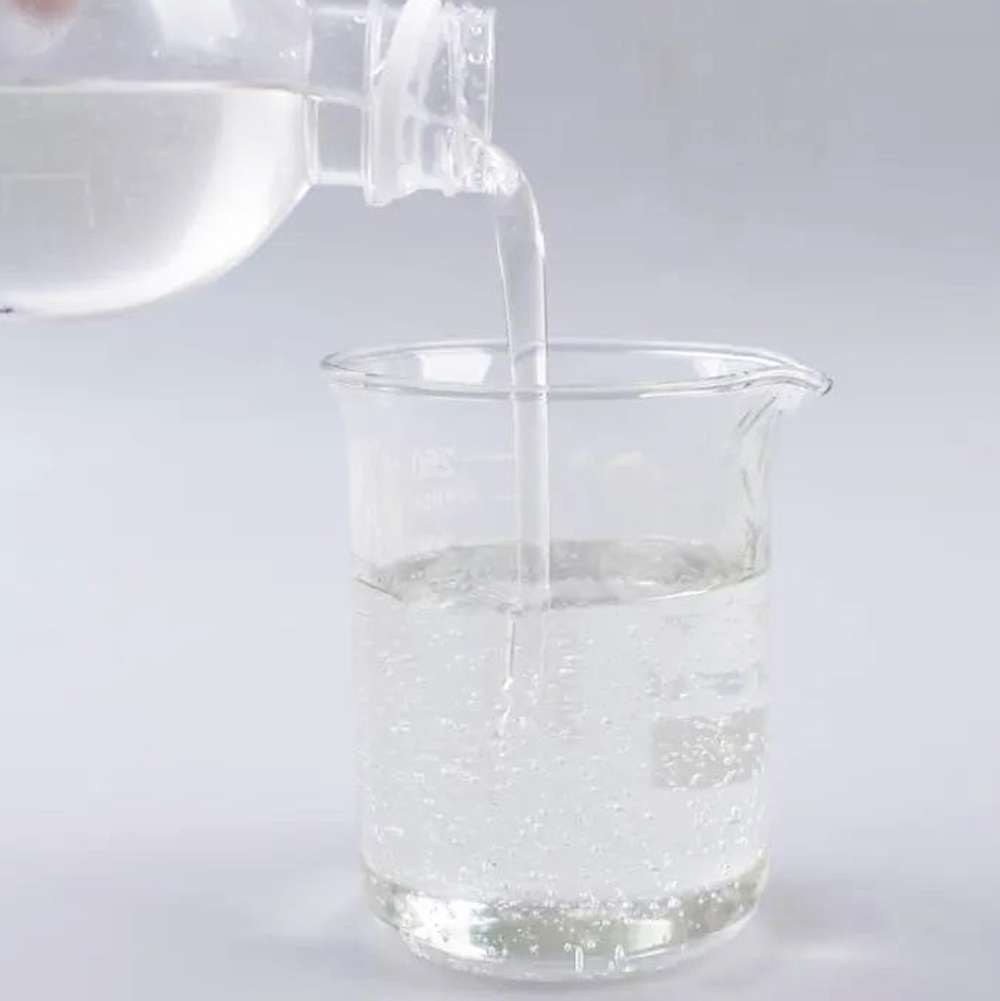
(July 3, 2026) Since the second quarter of 2026, the domestic phenyl silicone oil industry has successively benefited from both technological advancements that have enabled mass production and increased demand from downstream industries. With the stable production of electronic-grade products with high phenyl content, the surge in demand for AI-based liquid cooling systems and power semiconductors, and the implementation of green manufacturing policies, the process of replacing imported high-end phenyl silicone oil products in China has accelerated significantly. The industry’s annual market size is expected to exceed 16.5 billion yuan, with a year-on-year growth rate remaining at a high level of 10.2%.
Recently, Xinan Chemical, a leading domestic silicone enterprise, in collaboration with the School of Materials Science at Zhejiang University, successfully achieved full-capacity and stable operation of a production line capable of producing 12,000 tons of high-phenyl silicone oil per year. The phenyl content of these products ranges from 45% to 60%. Thanks to a new process that combines three-stage molecular distillation with solid-phase catalysis, the purity of the products reaches 99.98%, metal ion impurities are below 5 ppm, volatile cyclic impurities are controlled within 200 ppm, and the thermal decomposition temperature exceeds 380°C.
The core optical, heat-resistant, and radiation-resistant properties of these products fully meet the standards of internationally renowned brands such as Dow Corning, Shin-Ei Glass, and Wacker Chemie, effectively breaking decades-long foreign monopolies in this high-end market segment.Industry technical experts have explained that for a long time, the core production capacity of high-purity, high-refractive-index phenyl silicone oil has been controlled by overseas companies, leading to a significant dependence on imported materials in domestic sectors such as semiconductors, aerospace, and medical aesthetics. The new mass production process adopts a supercritical carbon dioxide green synthesis method, which reduces solvent usage by 95% and VOC emissions by 88%. It also achieves closed-loop recycling of solid and wastewater waste, resulting in a 35% decrease in the comprehensive production cost per unit of product compared to imported materials. Additionally, the product has obtained international certifications from SEMI for semiconductors, EU REACH for chemicals, and FDA for cosmetics. In the first quarter of 2026, the company's export volume of high-end phenyl silicone oil increased by 72.4% year-on-year, with an average export price of $12,800 per ton remaining stable.
The growing demand from various downstream applications has become a key driver for the phenyl silicone oil market:
- The AI computing power immersion liquid cooling sector has seen explosive growth.
- Phenyl silicone oil with high insulation, low volatility, and high thermal stability is now being widely used in high-density GPU servers for immersion cooling. Its thermal conductivity can reach 0.2W/m·K, making it suitable for long-duration, continuous high-temperature conditions in supercomputing and intelligent computing centers. This effectively addresses the issues associated with traditional coolants, such as corrosion and high volatility.Institutional estimates predict that by 2026, the consumption of phenyl silicone oil in the semiconductor and data center sectors will reach 64,000 tons, with a production value exceeding 7.12 billion yuan, representing a year-on-year increase of 10.3%.
The demand for power semiconductors and new energy vehicles continues to rise. High refractive index phenyl silicone oil (1.52-1.55) is widely used in the insulation packaging of IGBTs and automotive power devices, the sealing of photovoltaic inverters, and the protection of hydrogen energy equipment. Its resistance to high and low temperatures, as well as its anti-aging properties, significantly extend the lifespan of new energy equipment. Domestic companies such as Dongyue Silicon Materials have their electronic-grade phenyl silicone oil products integrated into the core supply chains of manufacturers like BYD, CATL, and leading photovoltaic firms. The growth rate in the high-end phenyl silicone oil market for automotive applications exceeds 18%.
The upgrading of standards in the premium beauty market has driven an increase in the demand for high-purity products. With the full implementation of the "Safety Technical Specifications for Phenyl Silicone Oil in Cosmetics," there is a rapid increase in demand for low-cyclohexane (D4/D5 ≤ 10ppm) and ultra-high purity medical-grade phenyl silicone oil. By 2026, the penetration rate of these high-end products is expected to rise from 38.6% last year to 45.2%. Their properties, such as a film-forming effect and high gloss, are widely used in high-end cosmetic ingredients such as foundations, lipsticks, and skincare serums.There is a growing demand for special materials in the aerospace industry. Phenyl silicone oil, with its excellent radiation resistance and wide-temperature range lubrication properties, is used in the sealing of large aircraft engines and for the lubrication and protection of equipment on spacecraft. With the mass production of domestic large aircraft and the regular operation of space stations, orders for high-phenyl silicone oil specifically designed for military and aerospace applications have continued to increase, making it a core segment with high gross margins in the industry.
Looking at the industry landscape, by 2025, China's overall self-sufficiency rate for phenyl silicone oil had reached 92.7%, an increase of 2.6 percentage points from 2024, with annual imports amounting to 13,200 tons, a year-on-year decrease of 8.9%. The self-sufficiency rate for high-end electronic, medical beauty, and aerospace-specific phenyl silicone oil is expected to exceed 75% by 2026, up from 40 percentage points in 2022, completely reversing the historical pattern of "excess at the lower end and bottleneck at the higher end." Currently, three domestic companies—Xin'an, Xingfa, and Hongda—have the capability to produce ultra-high-phenyl silicone oil in quantities of several thousand tons each. Multiple manufacturers have also started expanding their production lines to accurately meet the stable order demands resulting from the long validation cycles in the downstream market.
At the policy level, the "Advanced Organic Silicon Functional Materials Industrialization Action Plan (2025-2027)" has identified phenyl silicone oil as a key strategic new material and provides special subsidies and tax incentives for the research and development of high-end products and the transformation of green production lines. The Ministry of Industry and Information Technology has also introduced mandatory standards for green manufacturing in organic silicon, requiring that new phenyl silicone oil production lines have an energy consumption of no more than 1.8 tons of standard coal per ton.
This initiative aims to eliminate outdated and low-end production capacity within the industry and accelerate the transformation towards products with higher purity, more functional properties, and a higher phenyl content. Currently, high-end special phenyl silicone oil accounts for over 55% of total output value, while the proportion of ordinary general-purpose products has dropped to 45%.Industry analysts predict that from 2026 to 2030, phenylsilicone oil will enter a period of rapid growth. The development of computing infrastructure, new energy, and domestic aerospace sectors will continue to drive demand growth. Additionally, significant progress in the research and development of bio-based phenylsilicone oil will further expand market opportunities in the medium to long term. By 2028, China is expected to become the world's largest market for phenylsilicone oil production and consumption, with its share of the global market for high-end products exceeding 40%, thereby propelling the domestic silicone industry towards the upper end of the global value chain.
With the advancement of core synthesis and purification technologies, the widespread adoption of green and low-carbon production processes, and the increasing demand for high-end applications, phenylsilicone oil, as a key material in specialty silicon products, is undergoing a transformation from being primarily imported to becoming a major exporter. This transformation provides essential material support for China's semiconductor, new energy, and high-end manufacturing industries, contributing to their autonomy and security in these sectors.